Roof defects rarely correct themselves. Even a problem that appears minor from ground level can allow water to reach the underlay, battens, insulation or structural timbers. Delaying an inspection may therefore turn a localised fault into more extensive deterioration.
Property owners in Cirencester, Gloucestershire, should pay particular attention to sudden changes in the roof, recurring leaks and visible movement. Prompt professional assessment helps identify the source of the problem and determine the appropriate repair before further damage develops.
Roof Problems That Require Prompt Professional Attention
Some roofing issues are more urgent than others. The following warning signs should not be ignored or covered with a temporary surface repair.
Active Water Leaks
Water entering a property is a clear sign that part of the roofing system is no longer providing adequate protection. Damp patches, dripping water and staining on ceilings should be investigated promptly, even if they only appear during heavy or wind-driven rain.
The visible damp area may not sit directly beneath the defect. Water can travel along rafters, underlay and other surfaces before entering the room below. A professional inspection is often necessary to trace the route of the moisture and repair its true entry point.
Loose or Missing Roof Tiles
A slipped, cracked or missing tile leaves the materials beneath the roof covering more exposed to the weather. Moisture can then penetrate the underlay or enter through existing weaknesses.
Loose tiles can also move further during strong winds. Replacing or securing affected tiles promptly helps preserve the surrounding roof and provides an opportunity to check whether damaged fixings, battens or neighbouring tiles contributed to the problem.
Damaged Flashing Around Chimneys and Junctions
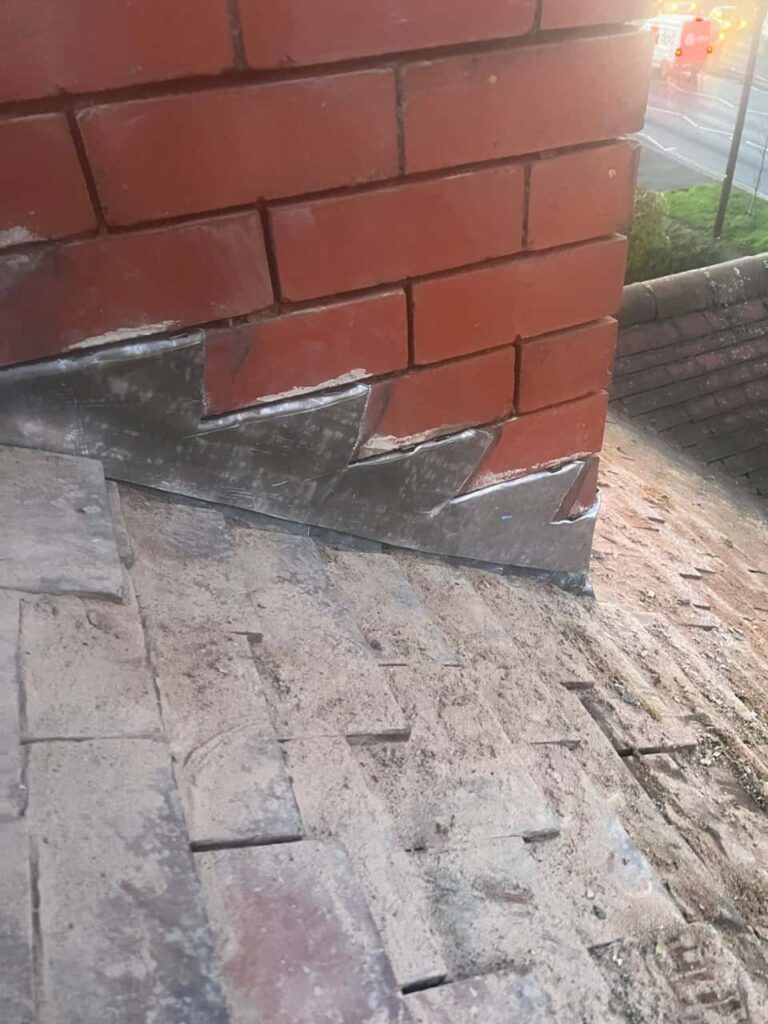
Flashing protects vulnerable points where the roof meets chimneys, walls and other structures. If it lifts, cracks or separates, water can enter through gaps that may be difficult to see from below.
Recurring damp near a chimney breast or roof junction often indicates that more than a surface seal is needed. The flashing, surrounding tiles, mortar and underlying materials should be assessed together so that the repair addresses the complete defect.
Sagging or Visible Roof Movement
A sagging roofline, uneven ridge or dipping section should never be left without investigation. These changes may be associated with weakened timbers, prolonged moisture exposure, failing supports or movement within the roof structure.
The cause cannot be established reliably from ground level. Early assessment is important because structural problems can worsen as the roof continues to carry its normal loads and withstand changing weather conditions.
Damaged Flat Roofing
Splits, blisters, lifted seams and areas of standing water on a flat roof require attention. Once the covering has been compromised, moisture can become trapped within the roof build-up and affect materials that are not visible externally.
Internal staining may not appear immediately. Arranging an inspection when surface damage is first noticed can help prevent concealed deterioration from spreading.
Blocked or Defective Roof Drainage
Overflowing gutters, blocked outlets and damaged downpipes can repeatedly direct water onto fascias, masonry and roof edges. Persistent saturation may contribute to decay and allow moisture to find its way behind the roof covering.
Water that remains on or around a roof should be treated as a warning sign. Restoring effective drainage and checking the affected areas helps protect the wider roofing system.
Deteriorating Chimney Mortar
Cracked pointing, loose mortar and unstable chimney components can allow moisture into the chimney structure and adjoining roof. During poor weather, loose materials may also damage nearby tiles or compromise the flashing.
Because chimney and roof defects often develop together, both areas should be inspected rather than treating the visible mortar damage in isolation.
Repeated Leaks or Failed Patches
A leak that returns after previous work may indicate that the original cause was not fully identified. It can also suggest deterioration beneath or beyond the patched area.
Repeatedly sealing the same section may conceal symptoms without restoring the roof’s performance. A thorough assessment considers the roof covering, underlay, flashing, drainage and supporting components to establish why the problem continues.
Why Timely Roof Repairs Matter
Prompt attention does not automatically mean that extensive work will be required. Many defects can remain localised when they are identified early and repaired correctly. The key is to act before water, movement or exposed materials affect connected parts of the roof.
A professional inspection also reduces guesswork. Rather than focusing only on the most visible symptom, a roofer can assess how the various components are functioning together and recommend work that addresses the underlying cause.
Conclusion
Active leaks, missing tiles, damaged flashing, structural movement, defective flat roofing and recurring repair failures should never be left until later. These problems can expose less visible parts of the roof to moisture and allow manageable defects to become more widespread.
If you have noticed a concerning change to your roof in Cirencester, Gloucestershire, contact LJ Roofing Cirencester to arrange a professional assessment. A timely inspection can clarify the cause of the issue and identify the most suitable repair without unnecessary work.
Call us on: 01285 704 395
Click here to find out more about LJ Roofing Cirencester
Click here to complete our contact form and see how we can help with your roofing needs.