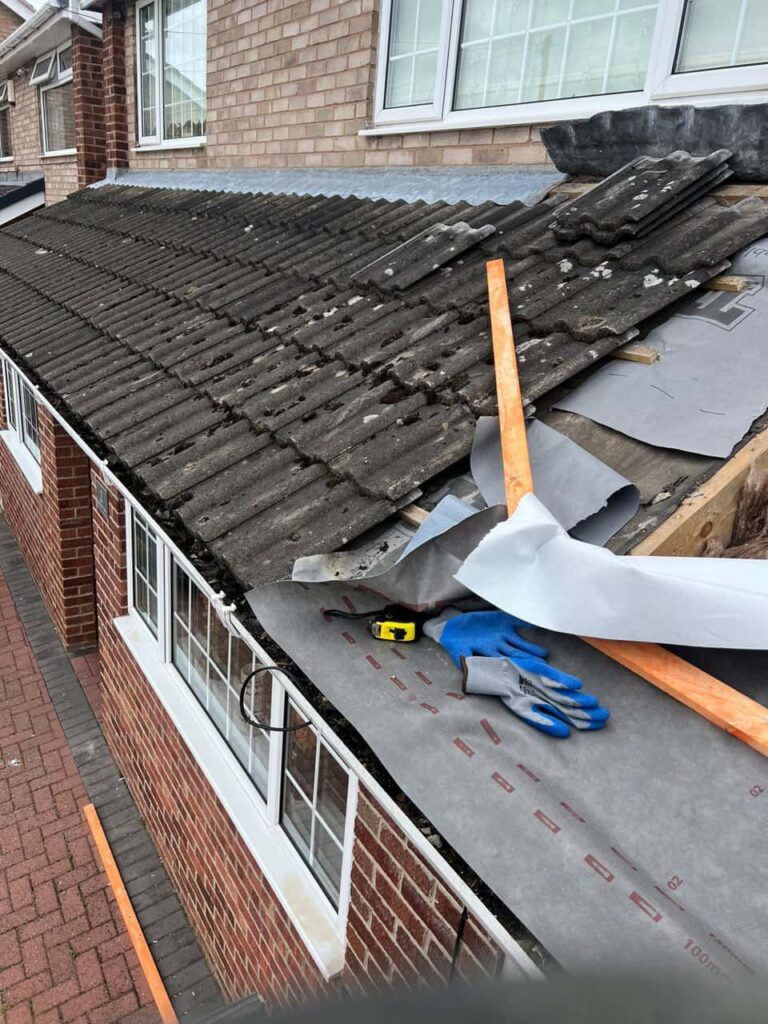
A roof leak appearing in a different room after an earlier repair can be confusing. It does not necessarily mean that the previous repair has failed. Water can travel beneath the roof covering, along timbers and through insulation before becoming visible some distance from its entry point.
For property owners in Cirencester, Gloucestershire, a leak that changes location should prompt a broader assessment of the roof. The aim is to determine whether water is following a new route from the original defect or entering through a separate vulnerable area.
Why a Roof Leak May Reappear Elsewhere
Water Does Not Always Fall Straight Down
Once rainwater enters beneath tiles or slates, it may follow the roof’s slope, run along a rafter or collect on the underlay. It can then emerge through a joint, fixing point or damaged section located away from the original entry point.
The position of an indoor damp patch therefore provides useful information, but it rarely identifies the roof defect on its own.
The Original Leak May Have Had Several Routes
A single damaged section can allow water to spread in different directions depending on rainfall intensity and wind direction. Light rain may follow one route, while wind-driven rain reaches another part of the roof space.
A repair may also stop one visible route while revealing moisture that was already travelling elsewhere. The surrounding covering, underlay and timbers should be checked to determine the full extent of the problem.
There May Be More Than One Defect
Ageing roofs can develop several weaknesses at around the same time. A cracked tile, deteriorated flashing and damaged underlay may each contribute to water ingress in different locations.
When a new damp patch appears in another room, it is important not to assume that both leaks share the same cause. Each affected area should be considered as part of a whole-roof assessment.
Hidden Moisture Can Take Time to Appear
Insulation, plasterboard and timber can retain water after the external defect has been repaired. Residual moisture may continue producing stains or occasional drips while the materials dry.
However, dampness that becomes worse during fresh rainfall usually suggests that water is still entering. Monitoring when the mark appears can help distinguish retained moisture from an active leak.
Check the Immediate Area Safely
If water is entering the room, move furniture and other vulnerable belongings away from the affected section. Use a container to catch drips where it is safe to do so.
Do not stand beneath a bulging ceiling or touch wet electrical fittings. Avoid entering the roof space during severe weather, particularly if the floor is difficult to navigate or lighting is poor.
Record Where and When the Leak Appears
Useful observations can help a roofer investigate the problem more efficiently. Make a note of:
- the room and exact location of the dampness
- when the leak first became visible
- whether it appears during light, heavy or wind-driven rain
- the direction from which the weather is coming
- whether the previous damp area has remained dry
- any visible changes to tiles, flashing or gutters
Photographs taken safely from inside the property can also show how the damp patch changes over time.
Arrange a Wider Roof Inspection
A returning leak in a different room calls for more than a check of the latest ceiling stain. The inspection should consider the roof covering, ridges, valleys, flashing, fixings, underlay and accessible timber components.
Previous repair areas should be checked alongside sections positioned above the new dampness. This helps establish whether the problem involves one travelling leak, multiple entry points or hidden deterioration beneath the covering.
Avoid Repeated Surface Patching
Applying sealant to an assumed entry point may briefly reduce visible water ingress without resolving the cause. It can also redirect water beneath the roof and make the route more difficult to trace.
A suitable repair should address the failed component and any surrounding deterioration. This may involve replacing damaged materials, securing displaced tiles, renewing flashing or repairing the underlay and supporting battens.
Why Professional Leak Detection Matters
Effective leak detection combines external evidence with the pattern of dampness inside the property. A roofer must consider the roof’s slope, overlapping materials, drainage paths and weather conditions.
This methodical approach reduces guesswork and helps ensure that the repair is matched to the actual defect rather than the point where water happens to become visible.
Conclusion
If a roof leak returns in a different room, the water may be travelling from the original entry point, following a new route or entering through a second defect. Record when the leak occurs, protect the affected room and arrange an inspection that considers the wider roofing system.
If you are experiencing recurring or changing roof leaks in Cirencester, Gloucestershire, contact LJ Roofing Cirencester. Our team can investigate the source of the water ingress and recommend a carefully targeted repair based on the roof’s condition.
Call us on: 01285 704 395
Click here to find out more about LJ Roofing Cirencester
Click here to complete our contact form and see how we can help with your roofing needs.